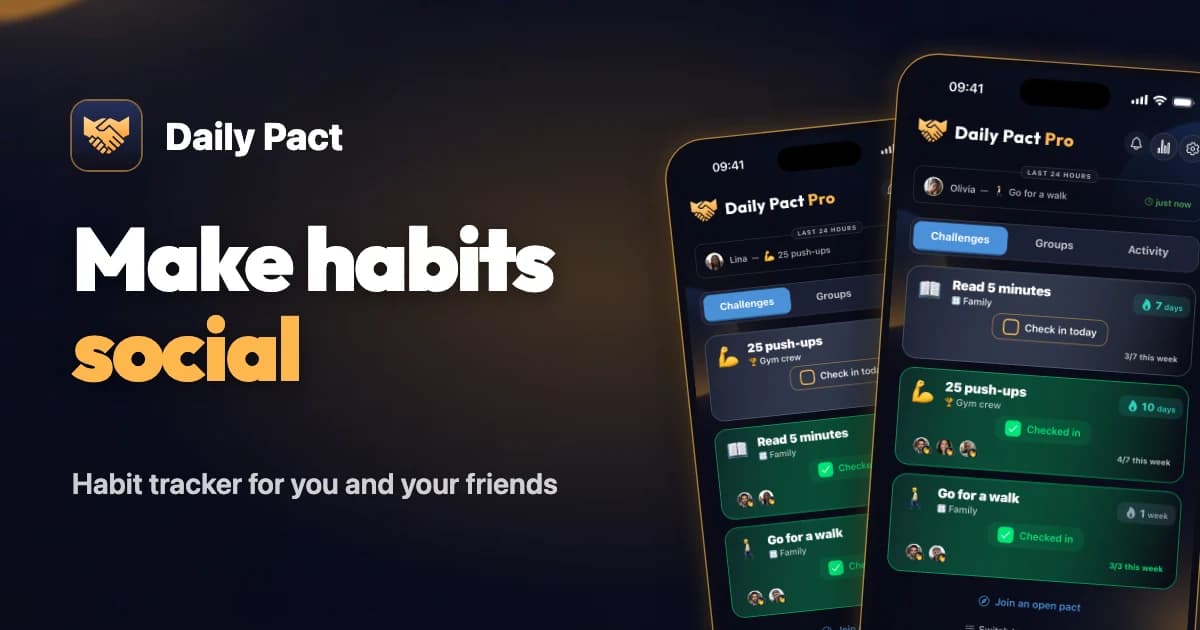
Most workplace wellness challenges don't fail because the idea was bad. They fail because the challenge asked for too much, nobody could see anyone else taking part, and by week two it had quietly turned into an email nobody opens.
This list is for small teams: a startup, a department, a clinic, a school staff room, a team of 10 to 200 people. Every idea below is one small daily habit with a clear yes or no. That's on purpose. A wellness challenge works when people can do it on their worst day and see their colleagues doing it too.
Pick one idea, not five. Then use the section on how to run it at the end.
What makes a good employee wellness challenge
Before the list, the three rules every idea here follows:
- Small enough for a bad day. If the habit takes more than 15 minutes or needs equipment, people with kids, long commutes or back-to-back meetings drop out first. The goal is participation, not performance.
- A clear yes or no. "Be more mindful" can't be checked off. "Two minutes of box breathing before your first meeting" can. Clear habits make daily check-ins honest and fast.
- Fair for everyone. Avoid challenges that reward the people who were already fit. A step challenge with a reachable target is fine. A "most kilometres run" contest isn't a wellness challenge, it's a race the same three people win.
Movement challenges
Movement is where most teams start, and for good reason: it's visible, easy to explain, and most desk jobs involve far too much sitting.
1. The 10-minute walk
Walk for at least 10 minutes every workday. Lunch, between meetings, or the commute home all count. This is the best first challenge for almost any team because nobody is excluded and nobody needs gear.
2. 7,000 steps a day
Pick a step target most of the team can reach, not 10,000. A reachable number keeps everyone in the challenge, and anyone who wants more can do more. If your team likes steps, our step challenge guide has more formats.
3. Take the stairs, every time
For 21 days, no elevator if you're going up or down three floors or fewer. Simple, a little funny, and it works in any office building.
4. Five minutes of desk stretching
Neck, shoulders, wrists and hips, before lunch. Share one short routine with the team on day one so nobody has to look one up.
5. Walking meetings
At least one call a day taken on foot. Good for one-on-ones and for remote teams who otherwise never leave the desk.
Sleep challenges
Sleep is the wellness habit people rate most important and do least about. A team challenge helps because it gives people a reason to say no to "one more episode".
6. Screens off by 10pm
No phone, laptop or TV after 10pm (or whatever time suits your team). The check-in is the next morning.
7. Same bedtime every night
Pick your own bedtime and stick to it within 30 minutes for 30 days. Personal targets make it fair for early birds and night owls alike.
8. No caffeine after 2pm
An easy one to explain, and plenty of people notice they fall asleep faster after a week or two.
9. Phone out of the bedroom
Charge it in the kitchen. Buy a 10-dollar alarm clock if you need one. This is a harder challenge, so save it for a team that has already finished an easier one.
Focus challenges
These are wellness challenges for the working day itself. They tend to be popular with managers, because they help the team too, but frame them as being for the person, not for productivity.
10. One hour of deep work
One block of 60 minutes a day with notifications off and no meetings. The team can agree on a shared quiet hour to make it easier.
11. No work email after 7pm
Or no Slack on weekends. This one only works if leadership does it too, so the person who runs the challenge should be the first to check in. When the check-ins are visible, as they are in a Daily Pact group, the team sees the boss logging off at 7pm, and that does more than any policy email.
12. A real lunch break
Away from the desk, no screen, at least 20 minutes. Many people haven't done this in years.
13. Single-tasking mornings
Close every tab except the one you're working in until 11am. Surprisingly hard, and people talk about it, which is good for a challenge.
Nutrition challenges
Nutrition challenges are easy to get wrong at work. Avoid anything about weight, calories or body size. Keep them about adding something good rather than banning things.
14. Water before coffee
One full glass of water before the first coffee or tea of the day. Tiny, and people love the streak.
15. A fruit or vegetable with lunch
Add one portion, every workday. No rules about anything else.
16. Bring lunch from home
Three days a week. It's a nutrition habit and a money habit, which makes it an easy sell.
17. No sugary drinks at work
For 21 days. Water, tea, coffee and sparkling water are all fine.
Mental health challenges
These work best when they're private in content and shared only in completion. Nobody has to say what they wrote in their journal. They just check in that they did it.
18. Two minutes of breathing
Box breathing (in for four, hold for four, out for four, hold for four) before the first meeting. It takes two minutes and needs nothing.
19. Three good things
Write down three things that went well today. A notebook or the notes app is fine.
20. Ten minutes outside
Daylight, fresh air, no headphones if you can manage it. Walking counts, sitting on a bench counts.
21. One thing off the list
Pick one small thing that's been nagging you, personal or work, and finish it. A good antidote to the low-level stress of a long to-do list.
22. Digital sunset
One evening hour with notifications off. If your team likes this, our wellness challenge ideas page has a full 30-day self care plan built around habits like it.
Social challenges
Loneliness at work is real, especially on remote and hybrid teams. Social challenges are also the ones that do the most for team culture, which makes them an easy case to make to a manager.
23. Thank a colleague
Send one specific thank-you message a day. In Slack, by email or in person.
24. A call with no agenda
One 10-minute call a week with a colleague you don't usually work with. Remote teams in particular get a lot out of this one.
25. Lunch together
Once a week, eat with at least one colleague. Away from the desk, no work talk required.
How to run an employee wellness challenge
The idea matters less than how you run it. These five steps are what separate a challenge people finish from one that fades.
Pick one habit
One. The temptation is to build a programme with a different theme every week. Don't, at least not for the first challenge. One habit is easy to explain in a sentence, easy to remember, and easy to check off. You can run a different one next month.
Run it for 21 to 30 days
Long enough to feel like an achievement, short enough that the finish line is visible from the start. Open-ended challenges fade because there's never a moment to celebrate. Start on a Monday, end on a Sunday, then take a week off before the next one.
If anyone asks why not longer: research by Phillippa Lally and colleagues at University College London found it took an average of 66 days for a new behaviour to feel automatic, with a wide range between people. A 30-day challenge won't make a habit permanent for everyone, and that's fine. It gets people most of the way, and the next challenge can build on it.
Invite everyone at once
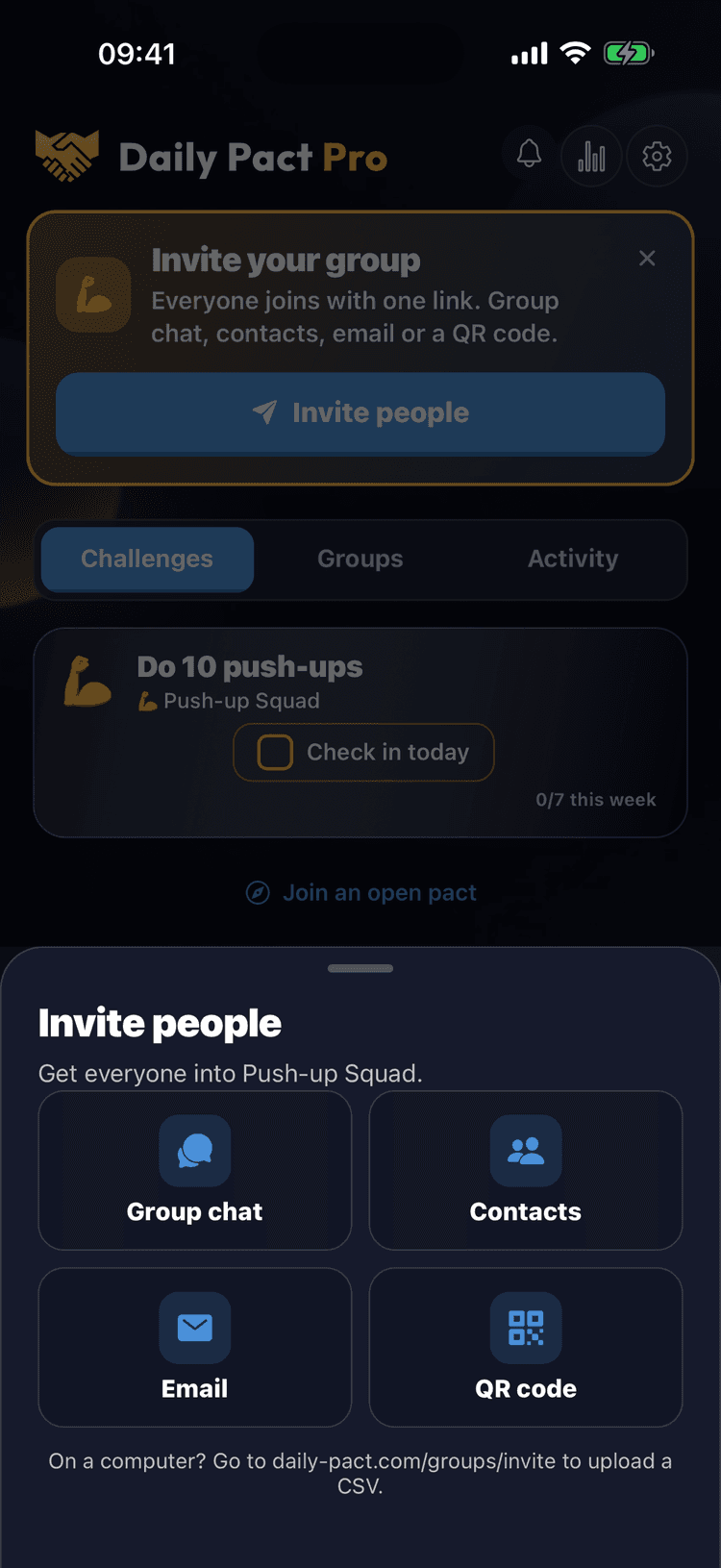
Challenges that trickle in over a week never build momentum. Send one invite to the whole team on the same day, ideally right after you mention it at a team meeting or all-hands. A QR code on the screen at the meeting gets more people in than an email sent later. (Daily Pact's invite sheet has one built in, next to the group chat link, contacts and email.)
Make check-ins daily and visible
This is the part most wellness programmes skip. A daily check-in that colleagues can see does two things: it reminds people the challenge exists, and it creates the gentle social pull that keeps them going. A group chat works for a week or two, then the updates stop and nobody wants to be the one asking. A shared leaderboard keeps working without anyone having to nag.
Decide up front what happens when someone misses a day. The kindest rule is that a miss costs you the day and nothing else. Groups that treat one miss as failure lose people in week two.
Keep the reward small
A small, shared reward works better than a big individual prize. A team breakfast when the group finishes, a shout-out at the next all-hands, or a donation to a charity the team picks. Big prizes make people game the check-ins and make the challenge feel like a competition instead of something you do together.
Running it in Daily Pact with the Group plan
We build Daily Pact, so take this section with that in mind. It was made for exactly this kind of challenge: a group, one shared habit, a daily check-in and a leaderboard everyone can see.
Here's how a team challenge works in the app:
- Create a group for the team and set the challenge, daily or a few times a week.
- Invite everyone at once. The Invite people sheet has four options: share one link in Slack or Teams, pick several contacts at once, paste a list of email addresses (up to 200 at a time, straight from a spreadsheet), or show a QR code at the all-hands. On the web you can also paste emails or upload a CSV at daily-pact.com/groups/invite and see who opened and who joined.
- Everyone checks in with one tap when they've done the day's habit. The app sends reminders, so the organizer doesn't have to.
- The leaderboard and streaks show who's keeping it going. If someone is sick or travelling, the group can grant a PactPause so their streak survives.
Cover the whole team
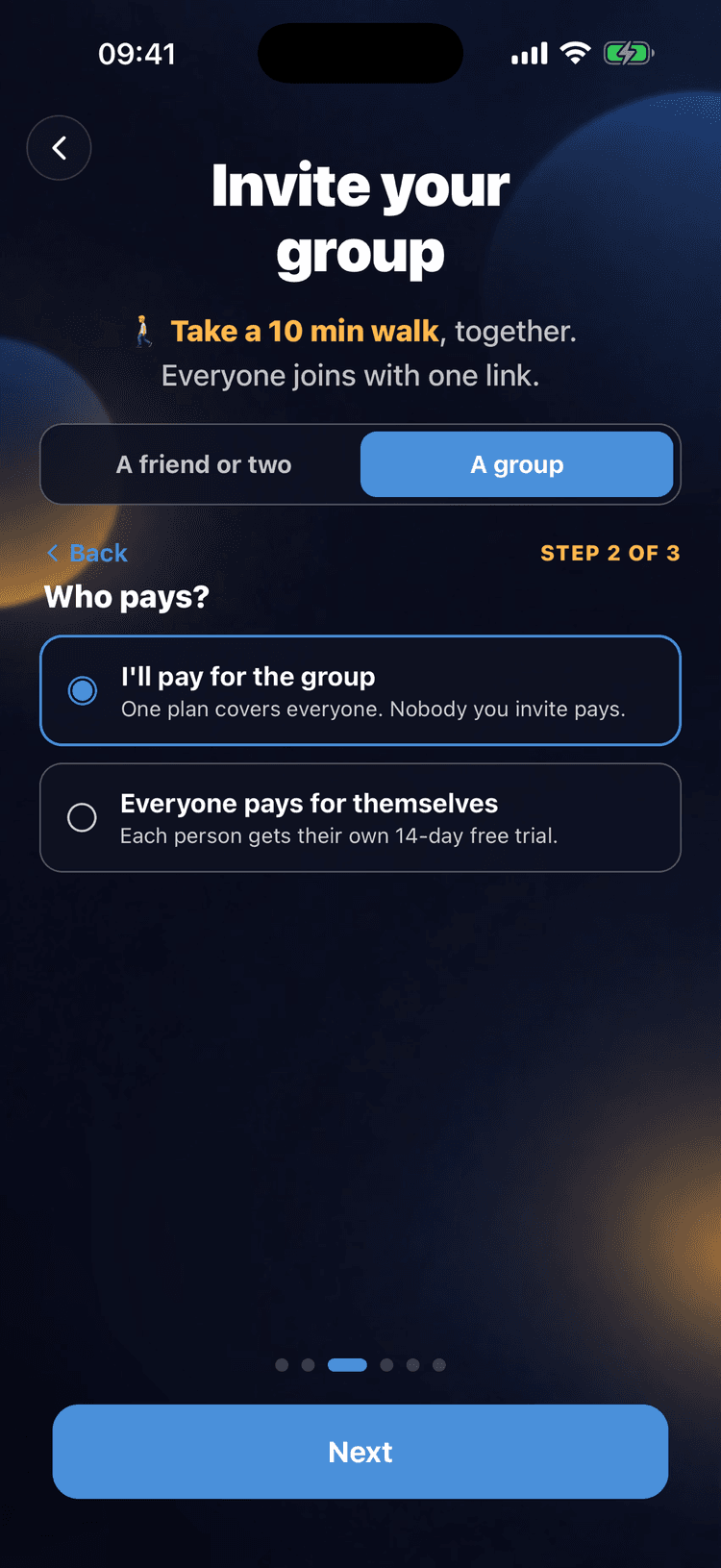
Normally each person in Daily Pact gets a 14-day free trial and then pays for Pro themselves. For a workplace challenge that's a problem: people drop off at the payment screen, and the challenge loses half the team before it starts.
The Group plan fixes that. One person, usually the team lead or whoever runs wellness, pays and covers everyone in their groups. Members see who covers the group and never hit a paywall.
| Team size | Monthly | Yearly |
|---|---|---|
| Up to 15 people | $9.99 | $99.99 |
| Up to 50 people | $24.99 | $249.99 |
| Up to 200 people | $49.99 | $499.99 |
Yearly plans give you two months free. The organizer gets full Pro too. You can cancel anytime and coverage runs to the end of the period. For comparison, per-seat wellness tools often charge around $3 to $8 per employee per month, so a 50-person team on the Group plan pays $24.99 a month in total.
To buy it, open your group in the app and tap Cover your whole group. It's billed through the App Store on iPhone or Google Play on Android.
For more on using Daily Pact at work, including privacy and how invites work, see our page on running an employee wellness challenge.
Quick answers
What is a good first wellness challenge for employees? A 10-minute daily walk for 21 days. Everyone can do it, it needs no equipment, and it's easy to check off.
How long should a workplace wellness challenge last? 21 to 30 days. Long enough to feel like an achievement, short enough to finish.
How do you get employees to take part? Invite everyone on the same day, make the habit small, make daily check-ins visible to the team, and have the person running it take part too.
Should wellness challenges be competitive? Lightly. Rank by consistency (days completed) rather than performance, so the person who walks every day beats the person who ran once.

Ready to build habits with friends?
Start your 14-day free trial. No credit card required.